This technique was borrowed from the systems theory which can be used to remove natural constraints to market growth and development.
“It is about identifying the cause and effect relations between market natural development and its decisive factors. It is similar to Forces Field Analysis; however, the development decisive factors are not considered as isolated forces but as a set of relations that affect a specific phenomenon in a systemic way.” (Vicari, 1998)
Figure 3-5 shows a Causal Mapping of the pay tv market.
“Pay Tv demand varies according to the subscription fees and to the broadcasting range on the territory. Indeed, the broadcasting range is directly related to the number of home receivers because it cuts the installation costs for each receiver through scale economy. So, it triggers a virtuous circle of increased installation. Another decisive factor for pay tv demand is program quality which depends on the services offered and on the number of native language programs broadcasted .
Further decisive factors of pay tv demand are free programs type and quality, together with the number of receivers installed.” (Vicari, 1998)
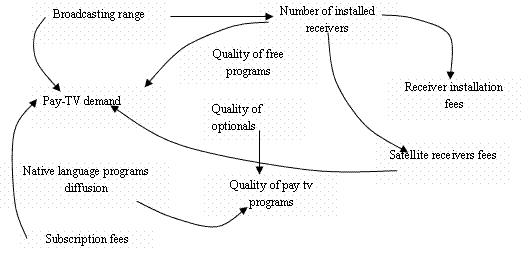
Figure 3-5: Pay Tv Market Causal Mapping (Source: Vicari, 1998)
“[…] This diagram allows to identify not only the restraining forces to the natural development of a specific phenomenon but also the whole set of cause and effect relations.
Causal Mappings mainly differ from Forces Field Analysis because they allow to identify the whole group of forces – which are seen as interacting causes – while Forces Field Analysis considers each cause on its own as an independent factor. So causal mappings give you an overview of all interacting causes that can hinder or promote development. Moreover, causal mappings differ from Forces Field Analysis– which results from a systemic view – because they allow to identify critical forces, i.e. forces that can affect a whole set of interrelated causes. You can remove restraining forces by focusing on “critical forces”. You need to make an effort to identify and remove all elements that are very likely to affect the system development. For example, if price is the main constraint to market development, then you need to focus on how cutting costs, e.g. by reengineering processes, redesigning products and modifying distribution methods or marketing activities.” (Vicari, 1998)
[Source: www.mycoted.com]
- Vicari S., La creatività dell’impresa. Tra caso e necessità, Milano, Etas Libri, 1998.